
Quick Answer:
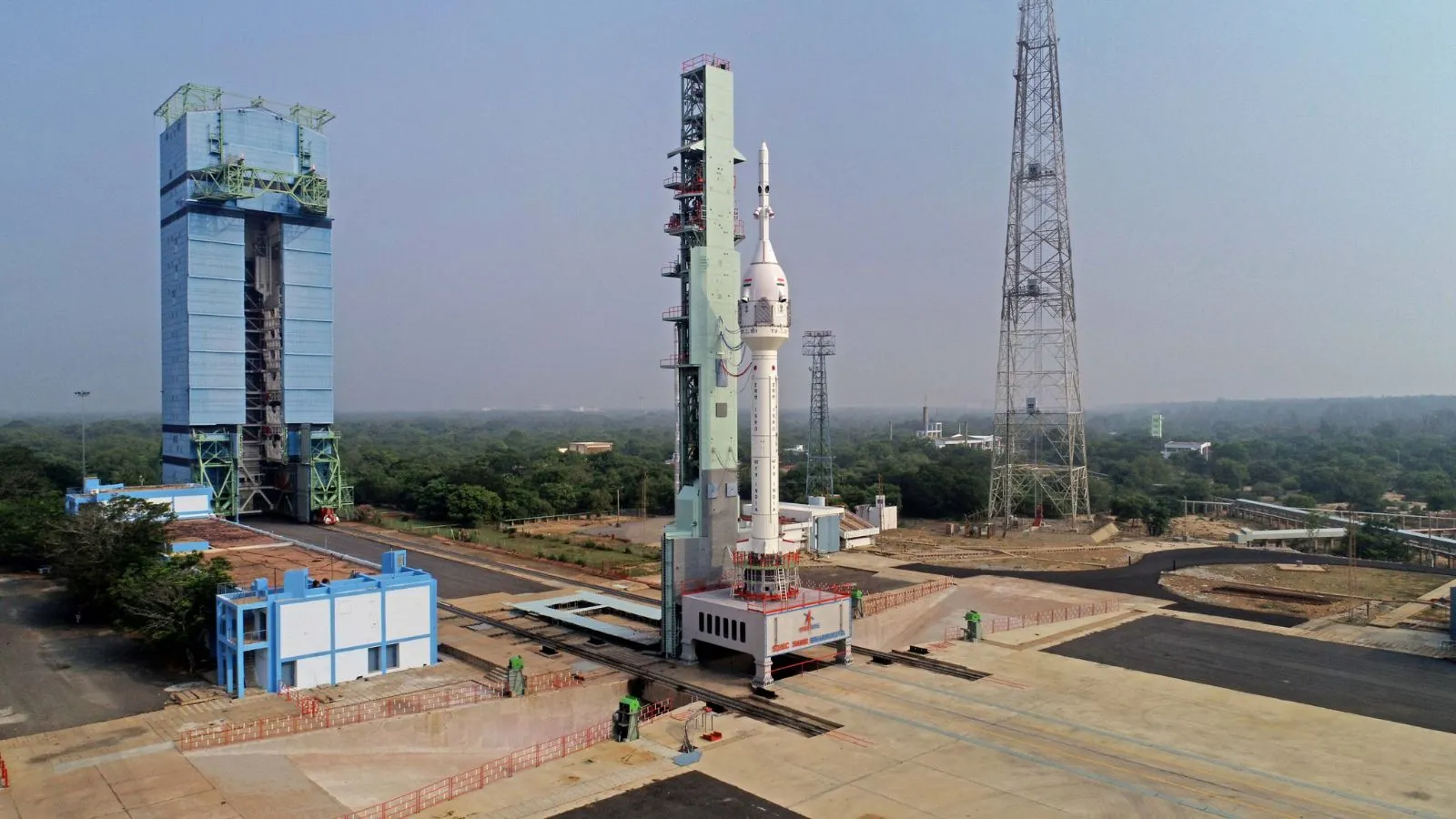
India’s first Gaganyaan uncrewed mission (G1) is in its final preparation phase, with ISRO completing key parachute qualification tests, crew module validation, and launch vehicle integration. The mission will test the entire human spaceflight system before astronauts are sent into orbit, making it one of India’s most significant space missions.
What Is the Gaganyaan Mission?
The Gaganyaan programme is India’s first human spaceflight project, led by the Indian Space Research Organisation (ISRO). Its objective is straightforward but technically demanding: launch Indian astronauts into Low Earth Orbit (LEO), keep them in space for several days, and safely return them to Earth.
Before humans fly, ISRO must prove that every system works exactly as planned. That’s why the **Gaganyaan uncrewed mission is such a major milestone. It will fly without astronauts while testing all critical hardware and recovery procedures.
According to the revised programme, Gaganyaan now includes multiple uncrewed and crewed missions as India prepares for future space station operations and long-term human spaceflight capabilities.
Why Is the Uncrewed Mission So Important?
Sending astronauts into space leaves no room for guesswork.
The first **Gaganyaan uncrewed flight will verify whether the complete mission sequence works under real flight conditions, including:
- Human-rated LVM3 launch vehicle performance
- Orbital Module operations
- Crew Module separation
- Re-entry through Earth’s atmosphere
- Parachute deployment
- Splashdown in the sea
- Recovery by the Indian Navy
If these systems perform successfully, ISRO can confidently move toward crewed missions.
Latest Gaganyaan Uncrewed Mission Update (2026)
ISRO has made steady progress throughout 2026 by completing several major qualification tests.
Recent achievements include:
- Successful Integrated Main Parachute Air Drop Test (IMAT)
- Second Integrated Air Drop Test (IADT-02)
- Validation of the Crew Module recovery sequence
- Human-rated launch vehicle integration activities
- Crew escape and avionics system verification
One interesting detail many people miss is the parachute system.
The Crew Module actually uses 10 parachutes divided into four different types:
- 2 Apex Cover Separation parachutes
- 2 Drogue parachutes
- 3 Pilot parachutes
- 3 Main parachutes
These deploy in a carefully timed sequence to reduce the capsule’s speed before splashdown in the ocean.
What Will Happen During the G1 Mission?
The G1 mission is designed as a full end-to-end demonstration.
Launch Phase
The Human Rated LVM3 rocket will lift off carrying the Orbital Module.
Orbital Operations
The spacecraft will enter Low Earth Orbit while onboard systems, communication links, navigation, thermal control, and power systems are monitored continuously.
Re-entry
After completing orbital objectives, the Crew Module will separate and begin atmospheric re-entry.
Temperatures during re-entry reach thousands of degrees Celsius, making the heat shield one of the mission’s most critical components.
Recovery
Once the capsule slows down using its parachutes, it will splash down in the sea where Indian Navy teams will recover it.
This recovery operation is almost as important as the launch itself because future astronauts will depend on the same process.
Will Vyommitra Fly on the Mission?
Yes.
ISRO plans to fly Vyommitra, a half-humanoid robot developed specifically for the Gaganyaan programme.
Vyommitra can:
- Monitor cabin conditions
- Operate spacecraft panels
- Communicate with mission control
- Collect performance data
- Demonstrate robotic operations inside the crew module
Its role is to simulate astronaut activities before humans board the spacecraft.
Current Mission Timeline
While launch schedules can change during final preparations, government updates indicate that the first uncrewed G1 mission remains a major priority before crewed flights begin. ISRO has continued qualifying systems throughout 2026 while completing vehicle integration and safety reviews.
The expected sequence looks like this:
- G1 — First uncrewed mission
- Additional uncrewed validation flights
- First crewed Gaganyaan mission
- Future docking demonstrations
- Indian space station development
Technical Specifications at a Glance
| Feature | Details |
|---|---|
| Programme | Gaganyaan |
| Space Agency | ISRO |
| Launch Vehicle | Human Rated LVM3 |
| Orbit | Low Earth Orbit |
| Mission Type | Uncrewed Test Flight |
| Crew Module Landing | Sea Splashdown |
| Recovery | Indian Navy |
| Special Payload | Vyommitra Robot |
How Does Gaganyaan Compare With Other Human Spaceflight Programs?
India becomes part of a small group of nations capable of independently developing human spaceflight technology.
Countries with indigenous human spaceflight capability include:
- Russia
- United States
- China
Once operational, Gaganyaan will place India among these spacefaring nations using largely indigenous technology.
Unlike many earlier human space programmes, ISRO has emphasized extensive ground testing before committing astronauts to flight.
What Comes After the Uncrewed Mission?
Success of the **Gaganyaan uncrewed mission opens the door to several ambitious projects.
Future plans include:
- India’s first crewed orbital mission
- Space docking demonstrations
- Bharatiya Antariksh Station (Indian Space Station)
- Advanced human spaceflight technologies
- Long-duration missions
- Lunar exploration support in the coming decades
India has also expanded the Gaganyaan programme to include additional uncrewed and crewed missions as part of its broader space roadmap.
Why This Mission Matters for India
The **Gaganyaan uncrewed mission is more than a test flight.
It validates technologies that influence multiple sectors:
- Aerospace manufacturing
- Robotics
- Artificial intelligence
- High-temperature materials
- Precision engineering
- Communication systems
- National security technologies
Many of these innovations eventually find applications outside the space industry.
If you’re interested in India’s latest space developments, you can also read our detailed guide on [related space missions] for more updates and analysis.
Final Thoughts
The **Gaganyaan uncrewed mission represents years of engineering, testing, and careful planning. With successful parachute trials, crew module validation, and launch vehicle integration already completed, ISRO is steadily moving toward one of the most important launches in India’s space history.
A successful G1 mission will provide the confidence needed before Indian astronauts make their first indigenous journey into orbit. For India’s space programme, this is the final major rehearsal before history is made.
FAQs
1. What is the Gaganyaan uncrewed mission?
It is ISRO’s first test flight under the Gaganyaan human spaceflight programme, designed to validate all spacecraft systems before astronauts fly.
2. Will astronauts be onboard the first Gaganyaan mission?
No. The first mission is uncrewed and may carry the humanoid robot Vyommitra instead of astronauts.
3. What rocket will launch Gaganyaan?
The mission will use the Human Rated LVM3 launch vehicle developed by ISRO.
4. Where will the Crew Module land?
It will perform a controlled splashdown in the sea, where Indian Navy recovery teams will retrieve it.
5. Why are parachute tests so important?
They ensure the Crew Module slows safely before splashdown, protecting future astronauts during landing.
6. What happens after the uncrewed mission?
If the mission succeeds, ISRO will proceed with additional validation flights followed by India’s first crewed Gaganyaan mission.
