
Commodities have been part of global markets for centuries, from gold and silver to crude oil, wheat, coffee, and natural gas. Today, investors can gain exposure to these markets without necessarily buying and storing barrels of oil, bags of wheat, or large quantities of precious metals.
If you are searching for how to invest in commodities, the first thing to understand is that commodities are different from stocks and bonds. Their prices can be influenced by inflation, interest rates, weather, geopolitical events, supply shortages, consumer demand, currency movements, and global economic growth.
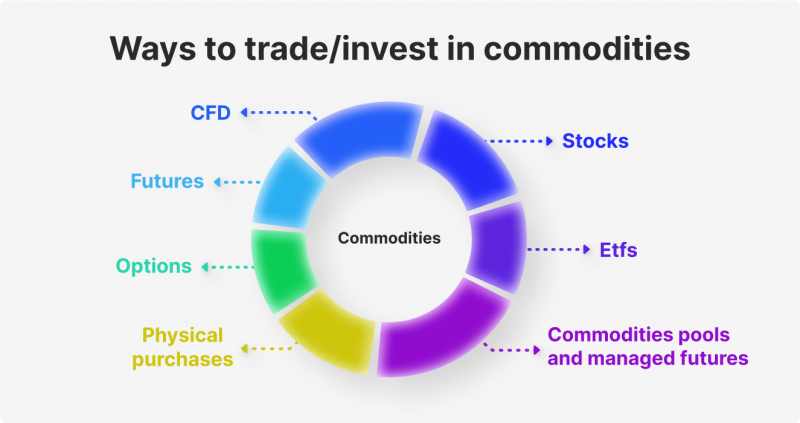
Fortunately, there are several ways to invest in commodities. Depending on your experience and risk tolerance, you can use commodity ETFs and exchange-traded products, physical metals, commodity-related stocks, mutual funds, or futures contracts.
What Are Commodities?
Commodities are basic raw materials or agricultural products that can be bought and sold in financial markets. They are generally divided into several major categories.
Energy:
- Crude oil
- Natural gas
- Gasoline
Precious metals:
- Gold
- Silver
- Platinum
- Palladium
Industrial metals:
- Copper
- Aluminum
- Nickel
- Zinc
Agricultural commodities:
- Wheat
- Corn
- Soybeans
- Coffee
- Sugar
- Cocoa
- Cotton
Livestock:
- Cattle
- Hogs
Commodity futures contracts allow traders to agree to buy or sell a specified quantity of a commodity at a predetermined price and future date.
Why Do People Invest in Commodities?
One reason investors consider commodities is diversification. Commodity prices can sometimes respond differently to economic conditions than stocks and bonds. Spreading investments across different asset classes can reduce concentration risk, although diversification cannot eliminate investment losses.
Commodities may also be used for:
- Portfolio diversification
- Exposure to natural-resource markets
- Potential inflation protection
- Speculation on commodity prices
- Exposure to global economic growth
- Holding physical precious metals
However, commodities are not automatically a hedge against every market decline. Their prices can fall substantially, sometimes for extended periods.
How to Invest in Commodities
There isn’t one universal method for commodity investing. The right approach depends on what you want exposure to and how much complexity and risk you can handle.
1. Invest Through Commodity ETFs and ETPs
For many individual investors, exchange-traded products can provide a simpler way to gain commodity exposure.
Some products attempt to track the price of a particular commodity, while others follow a group or index of commodities. There are also products that obtain exposure through futures contracts rather than owning the physical commodity.
ETFs trade through brokerage accounts during market hours, which can make them more convenient than purchasing and storing physical commodities. However, investors should read the fund’s prospectus carefully because commodity-based products can have structures and risks that differ considerably from ordinary stock ETFs.
Before buying one, check:
- What commodity or index it tracks
- Whether it owns physical assets or futures
- Expense ratio and other fees
- Trading volume and liquidity
- How futures contracts are rolled
- Tax treatment in your country
- Historical tracking performance
2. Buy Physical Precious Metals
Physical gold and silver are another way to gain commodity exposure.
Investors can purchase bullion bars or coins through reputable dealers. Physical ownership means you own the actual metal rather than a financial contract representing exposure to it.
The downside is that physical metals can involve dealer markups, storage costs, insurance, and security concerns. They also don’t normally generate dividends or interest.
For someone specifically interested in precious metals, physical ownership can therefore be quite different from buying a gold-related financial product.
3. Invest in Commodity-Related Companies
Another approach is to purchase shares of companies involved in commodity-producing industries.
Examples include:
- Mining companies
- Oil and gas producers
- Agricultural businesses
- Metal processors
- Energy infrastructure companies
This provides indirect commodity exposure. If the price of copper rises, for example, a copper mining company might benefit. But its share price is also affected by management decisions, debt, operating expenses, political conditions, labor issues, company earnings, and broader stock-market sentiment.
Therefore, buying a commodity company’s stock isn’t exactly the same as investing directly in the underlying commodity.
4. Commodity Mutual Funds
Some mutual funds invest in commodity-related companies, commodity futures, or a combination of assets.
The advantage can be professional management and diversification. However, the fund’s actual strategy matters considerably. Two funds with “commodity” in their names may have very different holdings and risk profiles.
Read the prospectus and understand what the fund actually owns before investing. Investor.gov recommends considering a fund’s objectives, fees, management, and how it fits into your overall financial situation.
5. Trade Commodity Futures
Futures provide more direct exposure to commodity prices, but they are also considerably more complicated.
A futures contract represents an agreement involving a particular commodity, quantity, price, and future date. Many contracts are closed before physical delivery occurs.
Futures also commonly involve margin, which means relatively small price movements can produce significant gains or losses relative to the money deposited.
The CFTC warns that commodity futures and options are volatile, complex, and risky and may not be suitable for many retail investors. In some circumstances, traders can lose more than their initial investment.
For beginners, understanding futures mechanics before using real money is essential.
How to Choose a Commodity to Invest In
Instead of choosing a commodity simply because its price has recently increased, investigate the factors that influence its market.
For example:
Gold: monetary policy, interest rates, currency movements, investor demand, and central-bank activity can affect prices.
Oil: production levels, inventories, transportation, economic activity, and geopolitical developments can influence the market.
Agricultural commodities: weather, crop conditions, harvests, exports, inventories, and global food demand can be important.
Copper: construction, manufacturing, infrastructure spending, industrial demand, and mine supply can influence prices.
The CFTC notes that energy commodities can be affected by supply and storage conditions, agricultural commodities by weather, and metals by industrial and broader economic factors.
Understand Commodity Futures Contango and Backwardation
One of the most overlooked aspects of commodity investing is the futures curve.
If an investment product continuously holds futures contracts, it may need to replace expiring contracts with later-dated contracts. This process is called rolling.
The difference between the prices of expiring and new contracts can affect returns. When later contracts cost more, rolling positions can create a negative effect known as negative roll yield or “contango drag.” When later contracts are cheaper, the effect can be positive.
This means a commodity investment can perform differently from the commodity’s headline spot price.
The CFTC specifically warns that rolling futures contracts can create a significant drag on returns under certain market conditions.
How Much Should You Invest in Commodities?
There is no single percentage that works for everyone.
Your allocation should depend on factors such as:
- Investment goals
- Time horizon
- Risk tolerance
- Existing investments
- Income and financial obligations
- Emergency savings
- Investment experience
Commodities can be volatile, so concentrating a large portion of a portfolio in one commodity can create substantial risk.
Diversification means spreading investments across assets and investments rather than relying heavily on a single market.
Common Mistakes to Avoid
Investing Because Prices Are Rising
A commodity that has recently surged can still fall sharply. Past price increases don’t guarantee future performance.
Ignoring Fees
Trading commissions, fund expenses, spreads, storage costs, management fees, and other expenses can reduce returns.
Confusing a Commodity ETF With Physical Ownership
A commodity-related fund may use futures, swaps, securities, or other structures rather than owning the actual commodity.
Using Too Much Leverage
Leverage can magnify both gains and losses. Futures trading can potentially result in losses greater than the amount initially deposited.
Buying a Fund Without Reading Its Strategy
Look beyond the fund name. Check its holdings, methodology, expenses, risks, and whether it tracks physical commodities, futures, companies, or an index.
A Simple Commodity Investing Process for Beginners
If you’re learning how to invest in commodities, start with education rather than immediately trading.
A simple process is:
- Choose your objective. Decide why you want commodity exposure.
- Select a commodity category. Consider metals, energy, agriculture, or a broad basket.
- Choose an investment method. Compare physical commodities, ETFs/ETPs, stocks, mutual funds, and futures.
- Research the product. Read its prospectus and understand exactly what it owns.
- Compare costs. Look at management fees, spreads, commissions, storage expenses, and other charges.
- Understand the risks. Consider volatility, leverage, liquidity, and futures-roll effects.
- Start cautiously. Avoid putting money into an investment you don’t understand.
- Review your allocation periodically. Make sure the investment still fits your overall financial plan.
Final Thoughts
Learning how to invest in commodities starts with understanding that commodities aren’t a single investment category. Gold, oil, wheat, copper, and natural gas can behave very differently, and the investment vehicle you choose can have just as much influence on your results as the commodity itself.
For beginners, commodity ETFs or other exchange-traded products may offer a more accessible route than directly trading futures, but they still require careful research. Physical metals can provide direct ownership, while commodity stocks offer indirect exposure with additional company-specific risks.
Whatever method you consider, understand the underlying commodity, read the product’s disclosures, compare costs, and avoid taking risks you cannot afford. Commodity investing can be useful as part of a diversified strategy, but it is not a guaranteed way to make money.
This article is for educational purposes only and is not personalized financial, investment, tax, or legal advice. Commodity investments can lose value, and some futures strategies can result in losses exceeding the initial amount deposited.
Top Google Searches Related to “How to Invest in Commodities”
People researching this topic may also search for:
- How to invest in commodities for beginners
- How to invest in commodities online
- How to invest in commodities without buying futures
- How to invest in commodities through ETFs
- How to invest in gold and other commodities
- How to invest in commodity stocks
- How to invest in oil commodities
- How to invest in agricultural commodities
- How to invest in commodity futures
- Best commodity ETFs for beginners
- Is investing in commodities a good idea?
- Are commodities a good investment?
- How much should I invest in commodities?
- How to buy commodities
- What is the best way to invest in commodities?
- How do commodity ETFs work?
- Commodity investing for beginners
- Physical commodities vs commodity ETFs
- Commodities vs stocks
- Commodities vs gold
Frequently Asked Questions
1. What is the easiest way to invest in commodities?
For many beginners, an exchange-traded product can be easier to access than directly trading futures. However, the exact structure matters because commodity ETPs can use futures, swaps, physical holdings, or other strategies. Always review the product documents before investing.
2. Can beginners invest in commodities?
Yes. Beginners can gain commodity exposure through several investment vehicles, including certain ETFs and other exchange-traded products, physical precious metals, commodity-related stocks, and mutual funds. Futures are generally more complex and carry substantially higher risks.
3. Is investing in commodities risky?
Yes. Commodity prices can be highly volatile and may respond quickly to changes in supply, demand, weather, economic conditions, currencies, interest rates, and geopolitical developments. Futures and leveraged products can create additional risks.
4. Can I invest in commodities without buying physical commodities?
Yes. You can potentially gain commodity exposure through ETFs or ETPs, mutual funds, commodity futures, or shares of companies involved in commodity production. The investment vehicle determines the type of exposure and risks you take.
5. Are commodity ETFs safe?
“Safe” depends on the particular product and your definition of risk. Commodity ETFs and ETPs can lose value, and products using futures may not closely match changes in the spot price of the underlying commodity. Investors should review the strategy, fees, risks, and underlying holdings before investing.
6. Can I invest in commodities with a small amount of money?
Some exchange-traded products can be purchased with relatively small amounts, depending on the broker and product price. However, affordability doesn’t necessarily mean low risk. Investors should consider transaction costs, fund expenses, spreads, and the volatility of the underlying commodity.
7. What is the difference between commodities and commodity stocks?
A commodity investment is designed to provide exposure to the commodity itself or its price, while a commodity stock represents ownership in a company. A mining company’s stock, for example, can be affected by the price of metals as well as the company’s debt, operating costs, management, production levels, and other business factors.
8. Is gold a commodity?
Yes. Gold is a precious metal and is commonly classified as a commodity. Investors can gain exposure through physical gold, certain exchange-traded products, futures, or shares of gold-mining companies. Each approach has different costs and risks.
9. What is commodity futures trading?
Commodity futures trading involves contracts that specify the purchase or sale of a particular commodity at a specified price and future date. Futures are standardized and traded through regulated exchanges, but they can be complex and highly leveraged.
10. Should commodities be part of a diversified portfolio?
Commodities may be used as one component of a diversified portfolio, but the appropriate allocation depends on an individual’s financial circumstances, goals, risk tolerance, and existing investments. Diversification can help reduce concentration risk, but it cannot guarantee profits or prevent losses.
